Tuesday, 29 August 2017

Legend Of Saints Of India Series Part 4 - Ras khan

रसखान (जन्म: १५४८ ई) कृष्ण भक्त मुस्लिम कवि थे। हिन्दी के कृष्ण भक्त तथा रीतिकालीनरीतिमुक्त कवियों में रसखान का अत्यंत महत्वपूर्ण स्थान है। रसखान को 'रस की खान' कहा गया है। इनके काव्य में भक्तिशृंगार रस दोनों प्रधानता से मिलते हैं। रसखान कृष्ण भक्त हैं और उनके सगुण और निर्गुण निराकार रूप दोनों के प्रति श्रद्धावनत हैं। रसखान के सगुण कृष्ण वे सारी लीलाएं करते हैं, जो कृष्ण लीला में प्रचलित रही हैं। यथा- बाललीला, रासलीला, फागलीला, कुंजलीला आदि। उन्होंने अपने काव्य की सीमित परिधि में इन असीमित लीलाओं को बखूबी बाँधा है। मथुरा जिले में महाबन में इनकी समाधि हैं|

महाकवि रसखान की महाबन (जिला मथुरा) में स्थित समाधि

समाधि
भारतेन्दु हरिश्चन्द्र ने जिन मुस्लिम हरिभक्तों के लिये कहा था, "इन मुसलमान हरिजनन पर कोटिन हिन्दू वारिए" उनमें रसखान का नाम सर्वोपरि है। बोधा और आलम भी इसी परम्परा में आते हैं। सय्यद इब्राहीम "रसखान" का जन्म अन्तर्जाल पर उपलब्ध स्रोतों के अनुसार सन् १५३३ से १५५८ के बीच कभी हुआ था। कई विद्वानों के अनुसार इनका जन्म सन् १५९० ई. में हुआ था। चूँकि अकबर का राज्यकाल १५५६-१६०५ है, ये लगभग अकबर के समकालीन हैं। इनका जन्म स्थान पिहानी जो कुछ लोगों के मतानुसार दिल्ली के समीप है। कुछ और लोगों के मतानुसार यह पिहानी उत्तरप्रदेश के हरदोई जिले में है। मृत्यु के बारे में कोई जानकारी नहीं मिल पाई। यह भी बताया जाता है कि रसखान ने भागवत का अनुवाद फारसी और हिंदी में किया है ।

परिचय[संपादित करें]

रसखान के जन्म के सम्बंध में विद्वानों में मतभेद पाया जाता है। अनेक विद्वानों इनका जन्म संवत् 1615 ई. माना है और कुछ ने 1630 ई. माना है। रसखान के अनुसार गदर के कारण दिल्ली श्मशान बन चुकी थी, तब दिल्ली छोड़कर वह ब्रज (मथुरा) चले गए। ऐतिहासिक साक्ष्य के आधार पर पता चलता है कि उपर्युक्त गदर सन् 1613 ई. में हुआ था। उनकी बात से ऐसा प्रतीत होता है कि वह उस समय वयस्क हो चुके थे।
रसखान का जन्म संवत् 1590 ई. मानना अधिक समीचीन प्रतीत होता है। भवानी शंकर याज्ञिक का भी यही मानना है। अनेक तथ्यों के आधार पर उन्होंने अपने मत की पुष्टि भी की है। ऐतिहासिक ग्रंथों के आधार पर भी यही तथ्य सामने आता है। यह मानना अधिक प्रभावशाली प्रतीत होता है कि रसखान का जन्म सन् 1590 ई. में हुआ था।
रसखान के जन्म स्थान के विषय में भी कई मतभेद है। कई विद्वान उनका जन्म स्थल पिहानी अथवा दिल्ली को मानते है। शिवसिंह सरोज तथा हिन्दी साहित्य के प्रथम इतिहास तथा ऐतिहासिक तथ्यों के आधार पर रसखान का जन्म स्थान पिहानी जिला हरदोई माना जाए।
रसखान अर्थात् रस के खान, परंतु उनका असली नाम सैयद इब्राहिम था और उन्होंने अपना नाम केवल इस कारण रखा ताकि वे इसका प्रयोग अपनी रचनाओं पर कर सकें।

काव्य रचना[संपादित करें]

रसखान एक महान कवि थे। उनकी अधिकांश रचनायें भगवान कृष्ण को समर्पित हैं। निम्नलिखित सवैया में रसखान ने अगले जन्म के लिये ब्रज के आसपास उत्पन्न होने की कामना की है-
मानुष हों तो वही रसखान, बसौं नित गोकुल गाँव के ग्वारन।
जो पसु हौं तौ कहा बसु मेरौ, चरौं नित नंद की धेनु मँझारन।।
पाहन हौं तौ वही गिरि कौ जुधर्यौ कर छत्र पुरंदर कारन।
जो खग हौं तो बसेरौं नित, कालिंदी-कूल कदंब की डारन।।

Friday, 11 August 2017

Nebulae : What are they???

NEBULAE: WHAT ARE THEY AND WHERE DO THEY COME FROM?

A nebula is a truly wondrous thing to behold. Named after the Latin word for “cloud”, nebulae are not only massive clouds of dust, hydrogen and helium gas, and plasma; they are also often “stellar nurseries” – i.e. the place where stars are born. And for centuries, distant galaxies were often mistaken for these massive clouds.
Alas, such descriptions barely scratch the surface of what nebulae are and what there significance is. Between their formation process, their role in stellar and planetary formation, and their diversity, nebulae have provided humanity with endless intrigue and discovery.
For some time now, scientists and astronomers have been aware that outer space is not really a total vacuum. In fact, it is made up of gas and dust particles known collectively as the Interstellar Medium (ISM). Approximately 99% of the ISM is composed of gas, while about 75% of its mass takes the form of hydrogen and the remaining 25% as helium.
The interstellar gas consists partly of neutral atoms and molecules, as well as charged particles (aka. plasma), such as ions and electrons. This gas is extremely dilute, with an average density of about 1 atom per cubic centimeter. In contrast, Earth’s atmosphere has a density of approximately 30 quintillion molecules per cubic centimeter (3.0 x 10¹⁹ per cm³) at sea level.
Even though the interstellar gas is very dispersed, the amount of matter adds up over the vast distances between the stars. And eventually, and with enough gravitational attraction between clouds, this matter can coalesce and collapse to forms stars and planetary systems.

Nebula Formation:

In essence, a nebula is formed when portions of the interstellar medium undergo gravitational collapse. Mutual gravitational attraction causes matter to clump together, forming regions of greater and greater density. From this, stars may form in the center of the collapsing material, who’s ultraviolet ionizing radiation causes the surrounding gas to become visible at optical wavelengths.
Most nebulae are vast in size, measuring up to hundreds of light years in diameter. Although denser than the space surrounding them, most nebulae are far less dense than any vacuum created in an Earthen environment. In fact, a nebular cloud that was similar in size to Earth would only so much material that its mass would be only a few kilograms.

Nebula Classification:

Stellar objects that can be called Nebula come in four major classes. Most fall into the category of Diffuse Nebulae, which means they have no well-defined boundaries. These can be subdivided into two further categories based on their behavior with visible light – “Emission Nebulae” and “Reflection Nebulae”.
Emission Nebulae are those that emit spectral line radiation from ionized gas, and are often called HII regions because they are largely composed of ionized hydrogen. In contrast, Reflection Nebulae do not emit significant amounts of visible light, but are still luminous because they reflect the light from nearby stars.
There are also what is known as Dark Nebulae, opaque clouds that do not emit visible radiation and are not illuminated by stars, but block light from luminous objects behind them. Much like Emission and Reflection Nebulae, Dark Nebulae are sources of infrared emissions, chiefly due to the presence of dust within them.
Some nebulae are formed as the result of supernova explosions, and are hence classified as a Supernova Remnant Nebulae. In this case, short-lived stars experience implosion in their cores and blow off their external layers. This explosion leaves behind a “remnant” in the form of a compact object – i.e. a neutron star – and a cloud of gas and dust that is ionized by the energy of the explosion.
Other nebulae may form as Planetary Nebulae, which involves a low-mass star entering the final stage of its life. In this scenario, stars enter their Red Giant phase, slowly losing their outer layers due to helium flashes in their interior. When the star has lost enough material, its temperature increases and the UV radiation it emits ionizes the surrounding material it has thrown off.
This class also contains the subclass known as Protoplanetary Nebulae (PPN), which applies to astronomical objects that are experiencing a short-lived episode in a star’s evolution. This is the rapid phase that takes place between the Late Asymptotic Giant Branch (LAGB) and the following Planetary Nebula (PN) phase.
Four different planetary nebulae. Credit: NASA/Chandra Observatory
During the Asymptotic Giant Branch (AGB) phase, the star undergoes mass loss, emitting a circumstellar shell of hydrogen gas. When this phase comes to an end, the star enters the PPN phase, where it is energized by a central star, causing it to emit strong infrared radiation and become a reflection nebula. The PPN phase continues until the central star reaches a temperature of 30,000 K, after which it is hot enough to ionize the surrounding gas.

History of Nebula Observation:

Many nebulous objects were noticed in the night sky by astronomers during Classical Antiquity and the Middle Ages. The first recorded observation took place in 150 CE, when Ptolemy noted the presence of five stars in Almagast that appeared nebulous in his book. He also noted a region of luminosity between the constellations Ursa Major and Leo that was not associated with any observable star.
In his Book of Fixed Stars, written in 964 CE, Persian astronomer Abd al-Rahman al-Sufi made the first observation of an actual nebula. According to al-Sufi’s observations, “a little cloud” was apparent in a portion of the night sky where the Andromeda Galaxy is now known to be located. He also cataloged other nebulous objects, such as the Omicron Velorum and Brocchi’s Cluster.
On July 4th, 1054, the supernova that created the Crab Nebula (SN 1054,) was visible to astronomers on Earth, and recorded observations that were made by both Arabic and Chinese astronomers have been identified. While anecdotal evidence exists that other civilizations viewed the supernova, no records have been uncovered.
By the 17th century, improvements in telescopes led to the first confirmed observations of nebulae. This began in 1610, when French astronomer Nicolas-Claude Fabri de Peiresc made the first recorded observation of the Orion Nebula. In 1618, Swiss astronomer Johann Baptist Cysat also observed the nebula; and by 1659, Christiaan Huygens made the first detailed study of it.
By the 18th century, the number of observed nebulae began to increase and astronomers began to compile lists. In 1715, Edmund Halley published a list of six nebulae – M11M13M22M31M42, and the Omega Centauriglobular cluster (NGC 5139) – in his “An account of several nebulae or lucid spots like clouds, lately discovered among the fixt stars by help of the telescope.”
In 1746, French astronomer Jean-Philippe de Cheseaux compiled a list of 20 nebulae, included eight that were not previously known. Between 1751 and 53, Nicolas Louis de Lacaille cataloged 42 nebulae from the Cape of Good Hope, most of which were previously unknown. And in 1781, Charles Messier compiled his catalog of 103 “nebulae” (now called Messier objects), though some were galaxies and comets.
The number of observed and cataloged nebulae greatly expanded thanks to the efforts of William Herschel and his sister, Caroline. In 1786, the two published their Catalogue of One Thousand New Nebulae and Clusters of Stars, which was followed up in 1786 and 1802 by a second and third catalog. At the time, Herschel believed that these nebulae were merely unresolved clusters of stars, a belief he would amend in 1790 when he observed a true nebula surrounding a distant star.

Thursday, 10 August 2017

Legend Of Saints Of India Series Part 3 - Kabir

कबीरदास | Kabirdas

कबीर हिंदी साहित्य के महिमामण्डित व्यक्तित्व हैं। कबीर के जन्म के संबंध में अनेक किंवदन्तियाँ हैं। कुछ लोगों के अनुसार वे रामानन्द स्वामी के आशीर्वाद से काशी की एक विधवा ब्राह्मणी के गर्भ से पैदा हुए थे, जिसको भूल से रामानंद जी ने पुत्रवती होने का आशीर्वाद दे दिया था। ब्राह्मणी उस नवजात शिशु को लहरतारा ताल के पास फेंक आयी।
कबीर के माता- पिता के विषय में एक राय निश्चित नहीं है कि कबीर "नीमा' और "नीरु' की वास्तविक संतान थे या नीमा और नीरु ने केवल इनका पालन- पोषण ही किया था। कहा जाता है कि नीरु जुलाहे को यह बच्चा लहरतारा ताल पर पड़ा पाया, जिसे वह अपने घर ले आया और उसका पालन-पोषण किया। बाद में यही बालक कबीर कहलाया।
कबीर ने स्वयं को जुलाहे के रुप में प्रस्तुत किया है -
"जाति जुलाहा नाम कबीरा
बनि बनि फिरो उदासी।'
कबीर पन्थियों की मान्यता है कि कबीर की उत्पत्ति काशी में लहरतारा तालाब में उत्पन्न कमल के मनोहर पुष्प के ऊपर बालक के रूप में हुई। ऐसा भी कहा जाता है कि कबीर जन्म से मुसलमान थे और युवावस्था में स्वामी रामानन्द के प्रभाव से उन्हें हिंदू धर्म का ज्ञान हुआ। एक दिन कबीर पञ्चगंगा घाट की सीढ़ियों पर गिर पड़े थे, रामानन्द ज उसी समय गंगास्नान करने के लिये सीढ़ियाँ उतर रहे थे कि उनका पैर कबीर के शरीर पर पड़ गया। उनके मुख से तत्काल `राम-राम' शब्द निकल पड़ा। उसी राम को कबीर ने दीक्षा-मन्त्र मान लिया और रामानन्द जी को अपना गुरु स्वीकार कर लिया। कबीर के ही शब्दों में- `हम कासी में प्रकट भये हैं, रामानन्द चेताये'। अन्य जनश्रुतियों से ज्ञात होता है कि कबीर ने हिंदु-मुसलमान का भेद मिटा कर हिंदू-भक्तों तथा मुसलमान फक़ीरों का सत्संग किया और दोनों की अच्छी बातों को आत्मसात कर लिया।
जनश्रुति के अनुसार कबीर के एक पुत्र कमल तथा पुत्री कमाली थी। इतने लोगों की परवरिश करने के लिये उन्हें अपने करघे पर काफी काम करना पड़ता था। साधु संतों का तो घर में जमावड़ा रहता ही था।
कबीर को कबीर पंथ में, बाल- ब्रह्मचारी और विराणी माना जाता है। इस पंथ के अनुसार कामात्य उसका शिष्य था और कमाली तथा लोई उनकी शिष्या। लोई शब्द का प्रयोग कबीर ने एक जगह कंबल के रुप में भी किया है। वस्तुतः कबीर की पत्नी और संतान दोनों थे। एक जगह लोई को पुकार कर कबीर कहते हैं :-
"कहत कबीर सुनहु रे लोई।
हरि बिन राखन हार न कोई।।'
कबीर पढ़े-लिखे नहीं थे-
`मसि कागद छूवो नहीं, कलम गही नहिं हाथ।'
उन्होंने स्वयं ग्रंथ नहीं लिखे, मुँह से भाखे और उनके शिष्यों ने उसे लिख लिया। आप के समस्त विचारों में रामनाम की महिमा प्रतिध्वनित होती है। वे एक ही ईश्वर को मानते थे और कर्मकाण्ड के घोर विरोधी थे। अवतार, मूर्त्ति, रोज़ा, ईद, मसजिद, मंदिर आदि को वे नहीं मानते थे।

कबीर के नाम से मिले ग्रंथों की संख्या भिन्न-भिन्न लेखों के अनुसार भिन्न-भिन्न है। एच.एच. विल्सन के अनुसार कबीर के नाम पर आठ ग्रंथ हैं। विशप जी.एच. वेस्टकॉट ने कबीर के ८४ ग्रंथों की सूची प्रस्तुत की तो रामदास गौड ने `हिंदुत्व' में ७१ पुस्तकें गिनायी हैं।
कबीर की वाणी का संग्रह `बीजक' के नाम से प्रसिद्ध है। इसके तीन भाग हैं- रमैनी, सबद और सारवी यह पंजाबी, राजस्थानी, खड़ी बोली, अवधी, पूरबी, व्रजभाषा आदि कई भाषाओं की खिचड़ी है।
कबीर परमात्मा को मित्र, माता, पिता और पति के रूप में देखते हैं। यही तो मनुष्य के सर्वाधिक निकट रहते हैं। वे कभी कहते हैं-
`हरिमोर पिउ, मैं राम की बहुरिया' तो कभी कहते हैं, `हरि जननी मैं बालक तोरा'
उस समय हिंदु जनता पर मुस्लिम आतंक का कहर छाया हुआ था। कबीर ने अपने पंथ को इस ढंग से सुनियोजित किया जिससे मुस्लिम मत की ओर झुकी हुई जनता सहज ही इनकी अनुयायी हो गयी। उन्होंने अपनी भाषा सरल और सुबोध रखी ताकि वह आम आदमी तक पहुँच सके। इससे दोनों सम्प्रदायों के परस्पर मिलन में सुविधा हुई। इनके पंथ मुसलमान-संस्कृति और गोभक्षण के विरोधी थे।
कबीर को शांतिमय जीवन प्रिय था और वे अहिंसा, सत्य, सदाचार आदि गुणों के प्रशंसक थे। अपनी सरलता, साधु स्वभाव तथा संत प्रवृत्ति के कारण आज विदेशों में भी उनका समादर हो रहा है।
कबीर का पूरा जीवन काशी में ही गुजरा, लेकिन वह मरने के समय मगहर चले गए थे। वह न चाहकर भी, मगहर गए थे। वृद्धावस्था में यश और कीर्त्ति की मार ने उन्हें बहुत कष्ट दिया। उसी हालत में उन्होंने बनारस छोड़ा और आत्मनिरीक्षण तथा आत्मपरीक्षण करने के लिये देश के विभिन्न भागों की यात्राएँ कीं। कबीर मगहर जाकर दु:खी थे:
"अबकहु राम कवन गति मोरी।
तजीले बनारस मति भई मोरी।।''
कहा जाता है कि कबीर के शत्रुओं ने उनको मगहर जाने के लिए मजबूर किया था। वे चाहते थे कि कबीर की मुक्ति न हो पाए, परंतु कबीर तो काशी मरन से नहीं, राम की भक्ति से मुक्ति पाना चाहते थे:
"जौ काशी तन तजै कबीरा
तो रामै कौन निहोटा।''
अपने यात्रा क्रम में ही वे कालिंजर जिले के पिथौराबाद शहर में पहुँचे। वहाँ रामकृष्ण का छोटा सा मन्दिर था। वहाँ के संत भगवान गोस्वामी जिज्ञासु साधक थे किंतु उनके तर्कों का अभी तक पूरी तरह समाधान नहीं हुआ था। संत कबीर से उनका विचार-विनिमय हुआ। कबीर की एक साखी ने उन के मन पर गहरा असर किया-
`बन ते भागा बिहरे पड़ा, करहा अपनी बान।
करहा बेदन कासों कहे, को करहा को जान।।'
वन से भाग कर बहेलिये के द्वारा खोये हुए गड्ढे में गिरा हुआ हाथी अपनी व्यथा किस से कहे ?
सारांश यह कि धर्म की जिज्ञासा सें प्रेरित हो कर भगवान गोसाई अपना घर छोड़ कर बाहर तो निकल आये और हरिव्यासी सम्प्रदाय के गड्ढे में गिर कर अकेले निर्वासित हो कर ऐसी स्थिति में पड़ चुके हैं।
कबीर आडम्बरों के विरोधी थे। मूर्त्ति पूजा को लक्ष्य करती उनकी एक साखी है -

पाहन पूजे हरि मिलैं, तो मैं पूजौंपहार।
था ते तो चाकी भली, जासे पीसी खाय संसार।।
119 वर्ष की अवस्था में मगहर में कबीर का देहांत हो गया। कबीरदास जी का व्यक्तित्व संत कवियों में अद्वितीय है। हिन्दी साहित्य के १२०० वर्षों के इतिहास में गोस्वामी तुलसीदास जी के अतिरिक्त इतना प्रतिभाशाली व्यक्तित्व किसी कवि का नहीं है।
कबीर के दोहे सर्वाधिक प्रसिद्ध व लोकप्रिय हैं। हम कबीर के अधिक से अधिक दोहों को संकलित करने हेतु प्रयासरत हैं।
(1)
चाह मिटी, चिंता मिटी मनवा बेपरवाह।
जिसको कुछ नहीं चाहिए वह शहनशाह॥
(2)
माटी कहे कुम्हार से, तु क्या रौंदे मोय।
एक दिन ऐसा आएगा, मैं रौंदूगी तोय॥
(3)
माला फेरत जुग भयाफिरा न मन का फेर । 
कर का मन का डार देमन का मनका फेर ॥
(4)
तिनका कबहुँ ना निंदयेजो पाँव तले होय । 
कबहुँ उड़ आँखो पड़ेपीर घानेरी होय ॥
(5)
गुरु गोविंद दोनों खड़ेकाके लागूं पाँय । 
बलिहारी गुरु आपनोगोविंद दियो मिलाय ॥
(6)
सुख मे सुमिरन ना कियादु:ख में करते याद । 
कह कबीर ता दास कीकौन सुने फरियाद ॥
(7)
साईं इतना दीजियेजा मे कुटुम समाय । 
मैं भी भूखा न रहूँसाधु ना भूखा जाय ॥
(8)
धीरे-धीरे रे मनाधीरे सब कुछ होय । 
माली सींचे सौ घड़ाॠतु आए फल होय ॥
(9)
कबीरा ते नर अँध हैगुरु को कहते और । 
हरि रूठे गुरु ठौर हैगुरु रूठे नहीं ठौर ॥
(10)
माया मरी न मन मरामर-मर गए शरीर । 
आशा तृष्णा न मरीकह गए दास कबीर ॥
(11)
रात गंवाई सोय केदिवस गंवाया खाय । 
हीरा जन्म अमोल थाकोड़ी बदले जाय ॥
(12)
दुःख में सुमिरन सब करे सुख में करै न कोय।
जो सुख में सुमिरन करे दुःख काहे को होय ॥
(13)
बडा हुआ तो क्या हुआ जैसे पेड़ खजूर।
पंथी को छाया नही फल लागे अति दूर ॥
(14)
साधु ऐसा चाहिए जैसा सूप सुभाय।
सार-सार को गहि रहै थोथा देई उडाय॥
(15)
तिनका कबहुँ ना निंदियेजो पाँव तले होय । 
कबहुँ उड़ आँखो पड़ेपीर घानेरी होय ॥ 
(16)
जो तोको काँटा बुवै ताहि बोव तू फूल।
तोहि फूल को फूल है वाको है तिरसुल॥
(17)
उठा बगुला प्रेम का तिनका चढ़ा अकास।
तिनका तिनके से मिला तिन का तिन के पास॥
(18)
सात समंदर की मसि करौं लेखनि सब बनराइ।
धरती सब कागद करौं हरि गुण लिखा न जाइ॥
(19)
साधू गाँठ न बाँधई उदर समाता लेय।
आगे पाछे हरी खड़े जब माँगे तब देय॥
(20)
माला फेरत जुग भयाफिरा न मन का फेर । 
कर का मन का डार देंमन का मनका फेर ॥

Legend Of Saints Of India Series Part 2 - Surdas

सूरदास का नाम कृष्ण भक्ति की अजस्र धारा को प्रवाहित करने वाले भक्त कवियों में सर्वोपरि है। हिंन्दी साहित्य में भगवान श्रीकृष्ण के अनन्य उपासक और ब्रजभाषा के श्रेष्ठ कवि महात्मा सूरदास हिंदी साहित्य के सूर्य माने जाते हैं। हिंदी कविता कामिनी के इस कमनीय कांत ने हिंदी भाषा को समृद्ध करने में जो योगदान दिया है, वह अद्वितीय है। सूरदास हिंन्दी साहित्य में भक्ति काल के सगुण भक्ति शाखा के कृष्ण-भक्ति उपशाखा के महान कवि हैं।

जीवन परिचय

सूरदास का जन्म १४७८ ईस्वी में रुनकता नामक गाँव में हुआ। यह गाँव मथुरा-आगरा मार्ग के किनारे स्थित है। कुछ विद्वानों का मत है कि सूर का जन्म सीही [1] नामक ग्राम में एक निर्धन सारस्वत ब्राह्मण परिवार में हुआ था। बाद में ये आगरा और मथुरा के बीच गऊघाट पर आकर रहने लगे थे। सूरदास के पिता रामदास गायक थे। सूरदास के जन्मांध होने के विषय में [2] मतभेद है। प्रारंभ में सूरदास आगरा के समीप गऊघाट पर रहते थे। वहीं उनकी भेंट श्री वल्लभाचार्य से हुई और वे उनके शिष्य बन गए। वल्लभाचार्य ने उनको पुष्टिमार्ग में दीक्षित कर के कृष्णलीला के पद गाने का आदेश दिया। सूरदास की मृत्यु गोवर्धन के निकट पारसौली ग्राम में १५८० ईस्वी में हुई।

सूरदास की जन्मतिथि एवं जन्मस्थान के विषय में मतभेद

सूरदास की जन्मतिथि एवं जन्मस्थान के विषय में विद्वानों में मतभेद है। "साहित्य लहरी' सूर की लिखी रचना मानी जाती है। इसमें साहित्य लहरी के रचना-काल के सम्बन्ध में निम्न पद मिलता है -
मुनि पुनि के रस लेख।
दसन गौरीनन्द को लिखि सुवल संवत् पेख॥
इसका अर्थ संवत् १६०७ ईस्वी में माना गया है, अतएव "साहित्य लहरी' का रचना काल संवत् १६०७ वि० है। इस ग्रन्थ से यह भी प्रमाण मिलता है कि सूर के गुरु श्री बल्लभाचार्य थे।
सूरदास का जन्म सं० १५३५ ईस्वी के लगभग ठहरता है, क्योंकि बल्लभ सम्प्रदाय में ऐसी मान्यता है कि बल्लभाचार्य सूरदास से दस दिन बड़े थे और बल्लभाचार्य का जन्म उक्त संवत् की वैशाख् कृष्ण एकादशी को हुआ था। इसलिए सूरदास की जन्म-तिथि वैशाख शुक्ला पंचमी, संवत् १५३५ वि० समीचीन जान पड़ती है। अनेक प्रमाणों के आधार पर उनका मृत्यु संवत् १६२० से १६४८ ईस्वी के मध्य स्वीकार किया जाता है। रामचन्द्र शुक्ल जी के मतानुसार सूरदास का जन्म संवत् १५४० वि० के सन्निकट और मृत्यु संवत् १६२० ईस्वी के आसपास माना जाता है।
श्री गुरु बल्लभ तत्त्व सुनायो लीला भेद बतायो।
सूरदास की आयु "सूरसारावली' के अनुसार उस समय ६७ वर्ष थी। 'चौरासी वैष्णवन की वार्ता' के आधार पर उनका जन्म रुनकता अथवा रेणु का क्षेत्र (वर्तमान जिला आगरान्तर्गत) में हुआ था। मथुरा और आगरा के बीच गऊघाट पर ये निवास करते थे। बल्लभाचार्य से इनकी भेंट वहीं पर हुई थी। "भावप्रकाश' में सूर का जन्म स्थान सीही नामक ग्राम बताया गया है। वे सारस्वत ब्राह्मण थे और जन्म के अंधे थे। "आइने अकबरी' में (संवत् १६५३ ईस्वी) तथा "मुतखबुत-तवारीख' के अनुसार सूरदास को अकबर के दरबारी संगीतज्ञों में माना है।

क्या सूरदास जन्मान्ध थे ?[संपादित करें]

सूरदास श्रीनाथ की "संस्कृतवार्ता मणिपाला', श्री हरिराय कृत "भाव-प्रकाश", श्री गोकुलनाथ की "निजवार्ता' आदि ग्रन्थों के आधार पर, जन्म के अन्धे माने गए हैं। लेकिन राधा-कृष्ण के रूप सौन्दर्य का सजीव चित्रण, नाना रंगों का वर्णन, सूक्ष्म पर्यवेक्षणशीलता आदि गुणों के कारण अधिकतर वर्तमान विद्वान सूर को जन्मान्ध स्वीकार नहीं करते।
श्यामसुन्दर दास ने इस सम्बन्ध में लिखा है - "सूर वास्तव में जन्मान्ध नहीं थे, क्योंकि शृंगार तथा रंग-रुपादि का जो वर्णन उन्होंने किया है वैसा कोई जन्मान्ध नहीं कर सकता।" डॉक्टर हजारीप्रसाद द्विवेदी ने लिखा है - "सूरसागर के कुछ पदों से यह ध्वनि अवश्य निकलती है कि सूरदास अपने को जन्म का अन्धा और कर्म का अभागा कहते हैं, पर सब समय इसके अक्षरार्थ को ही प्रधान नहीं मानना चाहिए।"

रचनाएँ

सूरदास जी द्वारा लिखित पाँच ग्रन्थ बताए जाते हैं:
  • (१) सूरसागर - जो सूरदास की प्रसिद्ध रचना है। जिसमें सवा लाख पद संग्रहित थे। किंतु अब सात-आठ हजार पद ही मिलते हैं।
  • (२) सूरसारावली
  • (३) साहित्य-लहरी - जिसमें उनके कूट पद संकलित हैं।
  • (४) नल-दमयन्ती
  • (५) ब्याहलो
उपरोक्त में अन्तिम दो अप्राप्य हैं।
नागरी प्रचारिणी सभा द्वारा प्रकाशित हस्तलिखित पुस्तकों की विवरण तालिका में सूरदास के १६ ग्रन्थों का उल्लेख है। इनमें सूरसागर, सूरसारावली, साहित्य लहरी, नल-दमयन्ती, ब्याहलो के अतिरिक्त दशमस्कंध टीका, नागलीला, भागवत्, गोवर्धन लीला, सूरपचीसी, सूरसागर सार, प्राणप्यारी, आदि ग्रन्थ सम्मिलित हैं। इनमें प्रारम्भ के तीन ग्रंथ ही महत्त्वपूर्ण समझे जाते हैं, साहित्य लहरी की प्राप्त प्रति में बहुत प्रक्षिप्तांश जुड़े हुए हैं।
  • सूरसागर का मुख्य वर्ण्य विषय श्री कृष्ण की लीलाओं का गान रहा है।
  • सूरसारावली में कवि ने जिन कृष्ण विषयक कथात्मक और सेवा परक पदों का गान किया उन्ही के सार रूप में उन्होंने सारावली की रचना की है ।
  • सहित्यलहरी मैं सूर के दृष्टिकूट पद संकलित हैं।

सूरदास की काव्यगत विशेषताएँ

  • १. सूर के अनुसार भगवान श्रीकृष्ण के अनुग्रह से मनुष्य को सद्गति मिल सकती है। अटल भक्ति कर्मभेद, जातिभेद, ज्ञान, योग से श्रेष्ठ है।
  • २. सूर ने वात्सल्य, श्रृंगार और शांत रसों को मुख्य रूप से अपनाया है। सूर ने अपनी कल्पना और प्रतिभा के सहारे कृष्ण के बाल्य-रूप का अति सुंदर, सरस, सजीव और मनोवैज्ञानिक वर्णन किया है। बालकों की चपलता, स्पर्धा, अभिलाषा, आकांक्षा का वर्णन करने में विश्व व्यापी बाल-स्वरूप का चित्रण किया है। बाल-कृष्ण की एक-एक चेष्टा के चित्रण में कवि ने कमाल की होशियारी एवं सूक्ष्म निरीक्षण का परिचय दिया है़-
मैया कबहिं बढैगी चौटी?
किती बार मोहिं दूध पियत भई, यह अजहूँ है छोटी।
सूर के कृष्ण प्रेम और माधुर्य प्रतिमूर्ति है। जिसकी अभिव्यक्ति बड़ी ही स्वाभाविक और सजीव रूप में हुई है।
  • ३. जो कोमलकांत पदावली, भावानुकूल शब्द-चयन, सार्थक अलंकार-योजना, धारावाही प्रवाह, संगीतात्मकता एवं सजीवता सूर की भाषा में है, उसे देखकर तो यही कहना पड़ता है कि सूर ने ही सर्व प्रथम ब्रजभाषा को साहित्यिक रूप दिया है।
  • ४. सूर ने भक्ति के साथ श्रृंगार को जोड़कर उसके संयोग-वियोग पक्षों का जैसा वर्णन किया है, वैसा अन्यत्र दुर्लभ है।
  • ५. सूर ने विनय के पद भी रचे हैं, जिसमें उनकी दास्य-भावना कहीं-कहीं तुलसीदास से आगे बढ़ जाती है-
हमारे प्रभु औगुन चित न धरौ।
समदरसी है मान तुम्हारौ, सोई पार करौ।
  • ६. सूर ने स्थान-स्थान पर कूट पद भी लिखे हैं।
  • ७. प्रेम के स्वच्छ और मार्जित रूप का चित्रण भारतीय साहित्य में किसी और कवि ने नहीं किया है यह सूरदास की अपनी विशेषता है। वियोग के समय राधिका का जो चित्र सूरदास ने चित्रित किया है, वह इस प्रेम के योग्य है
  • ८. सूर ने यशोदा आदि के शील, गुण आदि का सुंदर चित्रण किया है।
  • ९. सूर का भ्रमरगीत वियोग-शृंगार का ही उत्कृष्ट ग्रंथ नहीं है, उसमें सगुण और निर्गुण का भी विवेचन हुआ है। इसमें विशेषकर उद्धव-गोपी संवादों में हास्य-व्यंग्य के अच्छे छींटें भी मिलते हैं।
  • १०. सूर काव्य में प्रकृति-सौंदर्य का सूक्ष्म और सजीव वर्णन मिलता है।
  • ११. सूर की कविता में पुराने आख्यानों और कथनों का उल्लेख बहुत स्थानों में मिलता है।
  • १२. सूर के गेय पदों में ह्रृदयस्थ भावों की बड़ी सुंदर व्यजना हुई है। उनके कृष्ण-लीला संबंधी पदों में सूर के भक्त और कवि ह्रृदय की सुंदर झाँकी मिलती है।
  • १३. सूर का काव्य भाव-पक्ष की दृष्टि से ही महान नहीं है, कला-पक्ष की दृष्टि से भी वह उतना ही महत्वपूर्ण है। सूर की भाषा सरल, स्वाभाविक तथा वाग्वैदिग्धपूर्ण है। अलंकार-योजना की दृष्टि से भी उनका कला-पक्ष सबल है। आचार्य हजारीप्रसाद द्विवेदी ने सूर की कवित्व-शक्ति के बारे में लिखा है-
सूरदास जब अपने प्रिय विषय का वर्णन शुरू करते हैं तो मानो अलंकार-शास्त्र हाथ जोड़कर उनके पीछे-पीछे दौड़ा करता है। उपमाओं की बाढ़ आ जाती है, रूपकों की वर्षा होने लगती है।
इस प्रकार हम देखते हैं कि सूरदास हिंदी साहित्य के महाकवि हैं, क्योंकि उन्होंने न केवल भाव और भाषा की दृष्टि से साहित्य को सुसज्जित किया, वरन् कृष्ण-काव्य की विशिष्ट परंपरा को भी जन्म दिया है।

Legend Of Saints Of India Series Part 1 - Meera

MiraBai (Meera Bai / Meerabai / Mirabai)

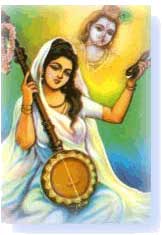
meera bai
MiraBai (1498 - 1547) was a Rajput princess who lived in the north Indian state of Rajasthan. She was a devout follower of Lord Krishna. MiraBai was one of the foremost exponents of the Prema Bhakti (Divine Love) and an inspired poetess. She sang in vraja-bhasha, sometimes mixed with rajasthani, in praise of Giridhara Gopala (Shri Krishna), her lord for whom she developed in her heart the most intense love and devotion.
Please Note: Mirabai, Mira Bai, Meerabai or Meera - All name belongs to same person. For better search ability on search engines we have used all these names in below story. It may cause a little confusion and we apologies in advance.
MiraBai was born in 1504 AD at Chaukari village in Merta District of Rajasthan. Merta was a small state in Marwar, Rajasthan ruled by the Ranthors, great devotees of Vishnu. Her father, Ratan Singh, was the second son of Rao Duda ji, a descendent of Rao Jodha ji Rathor, the founder of Jodhpur. MiraBai was raised and nurtured by her grandfather. As customary with royal families, her education included knowledge of scriptures, music, archery, fencing, horseback riding and driving chariots. She was also trained to wield weapons in case of a war. However, MiraBai also grew up amidst an atmosphere of total Krishna consciousness, which was responsible in molding her life in the path of total devotion towards Lord Krishna.
When she was just four years of age, she manifested her deep devotion to Krishna. MiraBai watched a marriage procession in front of her residence. MiraBai, the child, spotted the well-dressed bridegroom and asked her mother innocently, "Dear mother, who will be my bridegroom?" MiraBai's mother smiled, and half in jest and half in earnest, pointed towards the image of Sri Krishna and said, "My dear Mira, Lord Krishna - this beautiful fellow - is going to be your bridegroom". Soon after, MiraBai's mother passed on. As MiraBai grew up, her desire to be with her Krishna grew intensely and she believed that Lord Krishna would come to marry her. In due course, she became firmly convinced that Krishna was to be her husband.
MiraBai was soft-spoken, mild-mannered, gifted, sweet, and sang with a melodious voice. She was reputed to be one of the most extraordinary beauties of her time with fame spreading to several kingdoms and provinces. Her fame spread far and wide. Rana Sangram Singh, commonly known as Rana Sangha, the powerful King of Mewar, approached Rao Duda for MiraBai's hand in marriage to his son Bhojraj (also known as Rana Kumbha or KumbhaRana). Bhojraj wanted to marry MiraBai for her pious nature and divine intent. Rao Duda agreed to the union. However, MiraBai could not bear the thought of marrying a human being when her heart was filled with thoughts of every nature, all about her Krishna. But unable to go against her beloved grandfathers word, she finally consented to the marriage. MiraBai was wed to Rana Kumbha in 1513, before she turned 14. As ordained, MiraBai was dutiful. She left for (Chittorgarh) Mewar with the Rana Kumbha.
After her household duties were over, Meera would go to the temple of Lord Krishna, worship, sing and dance before Lord Krishna Idol daily. KumbhaRana's mother and other ladies of the palace did not like the ways of MiraBai, as they were worldly-minded and jealous. MiraBai's mother-in-law forced her to worship Durga and admonished her often. But MiraBai maintained, "I have already given up my life to my beloved Lord Krishna". MiraBai's sister-in-law Udabai formed a conspiracy and began to defame the innocent Meera. She informed Rana Kumbha that Meera was in secret love with some one, that she witnessed Meera talking to her lover(s) in the temple, and that she would show him the persons if he would accompany her one night. The ladies further raved that MiraBai, by her conduct, had brought a great slur on the reputation of the Rana family of Chittor. The enraged Kumbha ran with sword in hand towards Meera, but as luck would have it Meera had gone to her Krishna temple. A sober relative of the Rana counseled him, "Rana! You will forever repent for your hasty behavior and consequences. Enquire into the allegation carefully and you will find the truth. Meera bai is a great devotee of the Lord. Remember why you sought her hand. Out of sheer jealousy the ladies might have concocted scandals against Meera Bai to incite you and ruin her". Kumbha calmed down and accompanied his sister who persistently took him to the temple at dead of night. Rana Kumbha broke open the door, rushed inside and found Meera alone in her ecstatic mood talking and singing to the idol.
The Rana shouted at Meera, "Meera, show me your lover with whom you are talking now". Meera replied, "There sits He-my Lord-the Nanichora who has stolen my heart". She went into a trance. The ladies floated other rumors that Meera was mixing very freely with Sadhus. Meera was unaffected by such scandals and continued to invite Bhagavathas to join her in Krishna bhajan at the temple. She stood unruffled in the face of accusations from the royal family. When questioned about her marital responsibilities, Meera responded that it was Krishna to whom she was married. KumbhaRana was heart-broken but remained a good husband and sympathizer of Meera until his death.
Rana's relatives began persecuting Meera in various ways, even though Meera had no desire for the throne. Meera was sent a basket with a cobra inside and a message that the basket contained a garland of flowers. Meera, after meditation, opened the basket and found inside a lovely idol of Sri Krishna with a garland of flowers. The relentless Rana (her brother-in-law) sent her a cup of poison with the message that it was nectar. Meera offered it to her Lord Krishna and took it as His Prasad. It was real nectar to her. The bed of nails that the Rana sent transformed into a bed of roses when Meera reposed on it.
When the torture and scandals continued, Meera sent a letter to Goswami Tulsidas and asked for his advice. She wrote, "Simply because I am constantly tortured by my relatives, I cannot abandon my Krishna. I am unable to carry on with my devotional practices in the palace. I have made Giridhar Gopala my friend from my very childhood. I feel a total bondage with him. I cannot break that bond".
Tulsidasji sent a reply: "Abandon those who cannot understand you and who do not worship Rama or Syama, even though they are your dearest relatives. Prahlada abandoned his father; Vibhishana left his brother Ravana; Bharata deserted his stepmother; Bali forsook even his Guru; the Gopasthrees, the women of Vraja, disowned their husbands to get to their Krishna. Their lives were all the happier for having done so. The relation with God and the love of God are the only elements that are true and eternal; all other relationships are unreal and temporary". Meera met up once again with her Guru and mentor Raidas, who is said to have lived to a ripe age of 118 years. She went into the slums often to be in the satsang of this great teacher. This was the impetus and inspiration behind the many queries and controversies that she raised about Kulam in her songs.


The turning point in Meerabai's life occurred when once Akbar and his court musician Tansen came in disguise to Chittor to hear Meera's devotional and inspiring songs. Both entered the temple and listened to Meera's soul - stirring songs to their heart's content. Before he departed, he touched the holy feet of Meera and placed a necklace of priceless gems in front of the idol as a present. Somehow the news reached the KumbhaRana that Akbar had entered the sacred temple in disguise, touched the feet of Meerabai and even presented her a necklace. The Rana became furious. He told Meerabai, "Drown yourself in the river and never show your face to the world in future. You have brought great disgrace on my family".
Meerabai obeyed the words of King. She proceeded to the river to drown herself. The names of the Lord "Govinda, Giridhari, Gopala" were always on her lips. She sang and danced in ecstasy on her way to the river. When she raised her feet from the ground, a hand from behind grasped her and embraced her. She turned behind and saw her beloved Giridhari. She fainted on him. After a few minutes she opened her eyes. Lord Krishna smiled and gently whispered: "My dear Meera, your life with your mortal relatives is over now. You are absolutely free. Be cheerful. You are and have always been mine."
Meera walked barefoot on the hot sandy beds of Rajasthan. On her way, many ladies, children and devotees received her with great hospitality. She reached Brindavan (or Vrindaban). It was at Brindavan that she again met and was inspired by Sant Raidas. She went about Brindavan doing Oonchavritti and worshipped in the Govinda Mandir which has since become famous and is now a great place of pilgrimage for devotees from all over the world.
A repentant Kumbha came to Vrindavan to see Meera and prayed that he may be forgiven for all his previous wrongs and cruel deeds. He begged that Meera return to the kingdom and was assume her role as the queen once more. Meera said to Rana that Krishna is only one King and my life belongs to him. The KumbhaRana, for the first time, truly understood Meera's exalted state of mind and prostrated before her in reverence. He then promptly left Vrindavan a changed soul.
Jiva Gosain was the head of the Vaishnavites in Brindavan. Meera wanted to have Darshan of Jiva Gosain. He declined to see her. He sent word to Meera that he would not allow any woman in his presence. Mirabai retorted: "Everybody in Brindavan is a woman. Only Giridhar Gopala is Purusha. Today only I have come to know that there is another Purusha besides Krishna in Brindavan". Jiva Gosain was put to shame. He at once went to see Meera and paid her due respects.
Meera's fame spread far and wide. She was immersed in satsang day in and out. At the request of KumbhaRana, Meera returned to Mewar and Kumbha agreed to her request that she would reside in the temple of Krishna but would not restrict her movements and wanderings. From Mewar, she once again returned to Brindavan, and then went on to Dwaraka. The King went with her.
On Krishna's Janmashtami at the temple of Krishna. There was much happiness all around in the abode of the Lord. The light of the lamps, the sound of the bhajans and the energy from the devotees' ecstacy were filling the air. With Tamburi in one hand and cymbals or chipla in the other the great tapasvini was singing ecstatically with her Gopala smiling in front of her closed eyes. Meera stood up and danced with her song 'Mere Janama Maran ke sathee', and when the song ended, Kumbha gently approached her and requested her to come back. Meera said, 'Ranaji, the body is yours and you are a great devotee, but my mind, emotions and the soul are all his. I do not know what use am I to you at this state of mind'. Kumbha was moved and he started singing with her in unison. Meera rose up abruptly, stumbled and fell at the flowers on the feet of Giridhari. 'Oh, Giridhari, are you calling me, I am coming'. When Kumbha and the rest were watching in awe, there was a lightning which enveloped Meera and the sanctum doors closed on their own. When the doors opened again, Meera's saree was enveloping Lord Krishna's idol and her voice and the flute accompaniment were the only sounds that could be heard.
So many princesses and queens have come and gone. So many princesses, and queens have appeared on the stage of this world and vanished. How is it that the queen of Chittor alone is still remembered? Is this on account of her beauty? Is this on account of her poetic skill? No. It is on account of her renunciation, single-minded devotion to Lord Krishna and the self-realization. She conversed with Krishna. She ate with Krishna, her Beloved. She drank the Krishna-premarasa. She sang from the core of her heart about her unique spiritual experiences. She was indeed one of the foremost embodiments of Premabhakthi that ever walked on earth.

Meera Mahotsav (Mira Mahotsav)

Meera Smrithi Sansathan (Meera Memorial Trust) along with the Chittorgarh district officials organise Meera Mahotsav every year on Sharad Purnima day (On Mirabai's birth anniversary) for 3 days. Many famous musicians and singers get together to sing bhajan's in this celebration. The 3 days celebration also features puja's, discussions, dances, fire works etc.